Not Just Another Trip Report
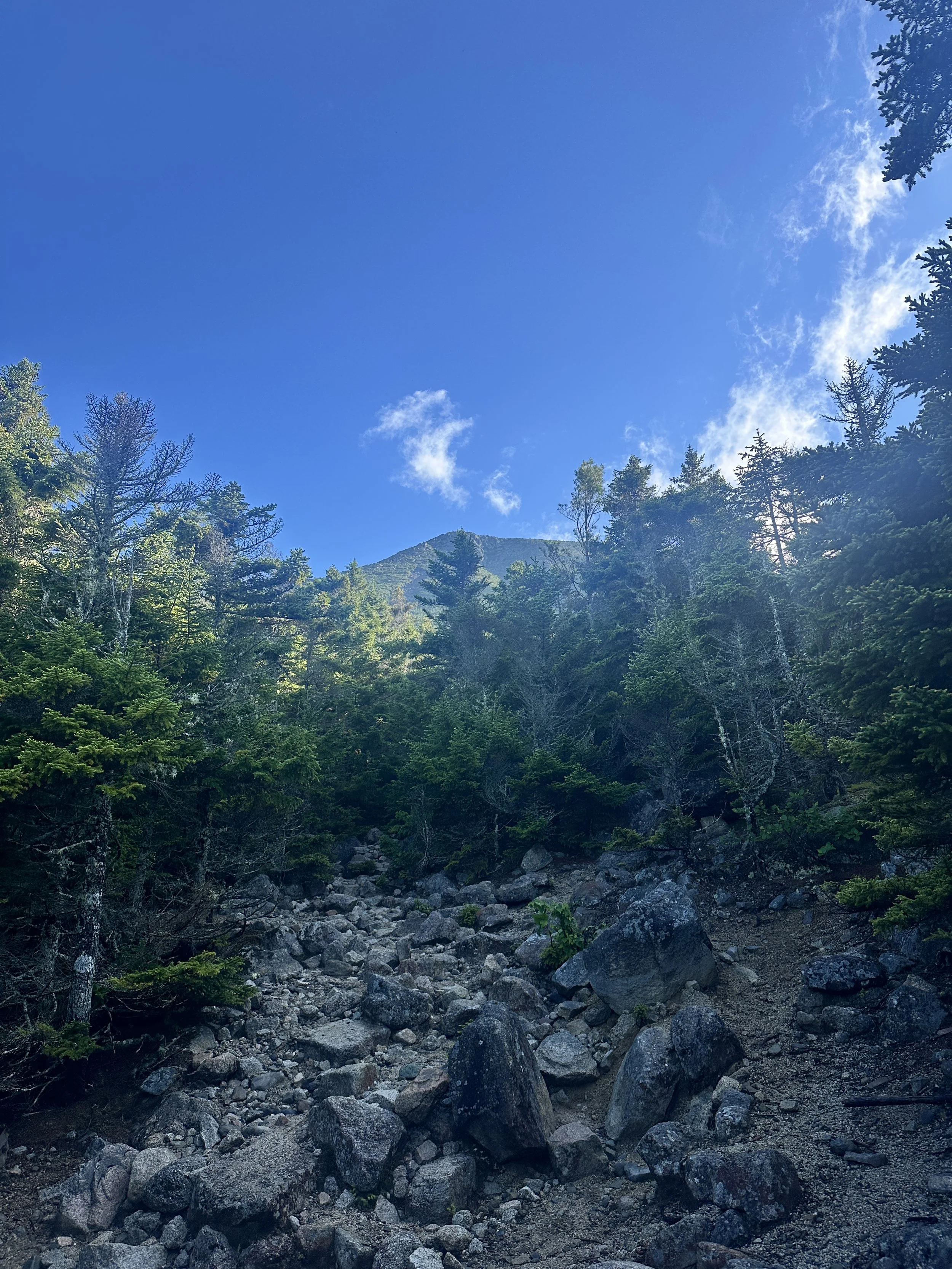
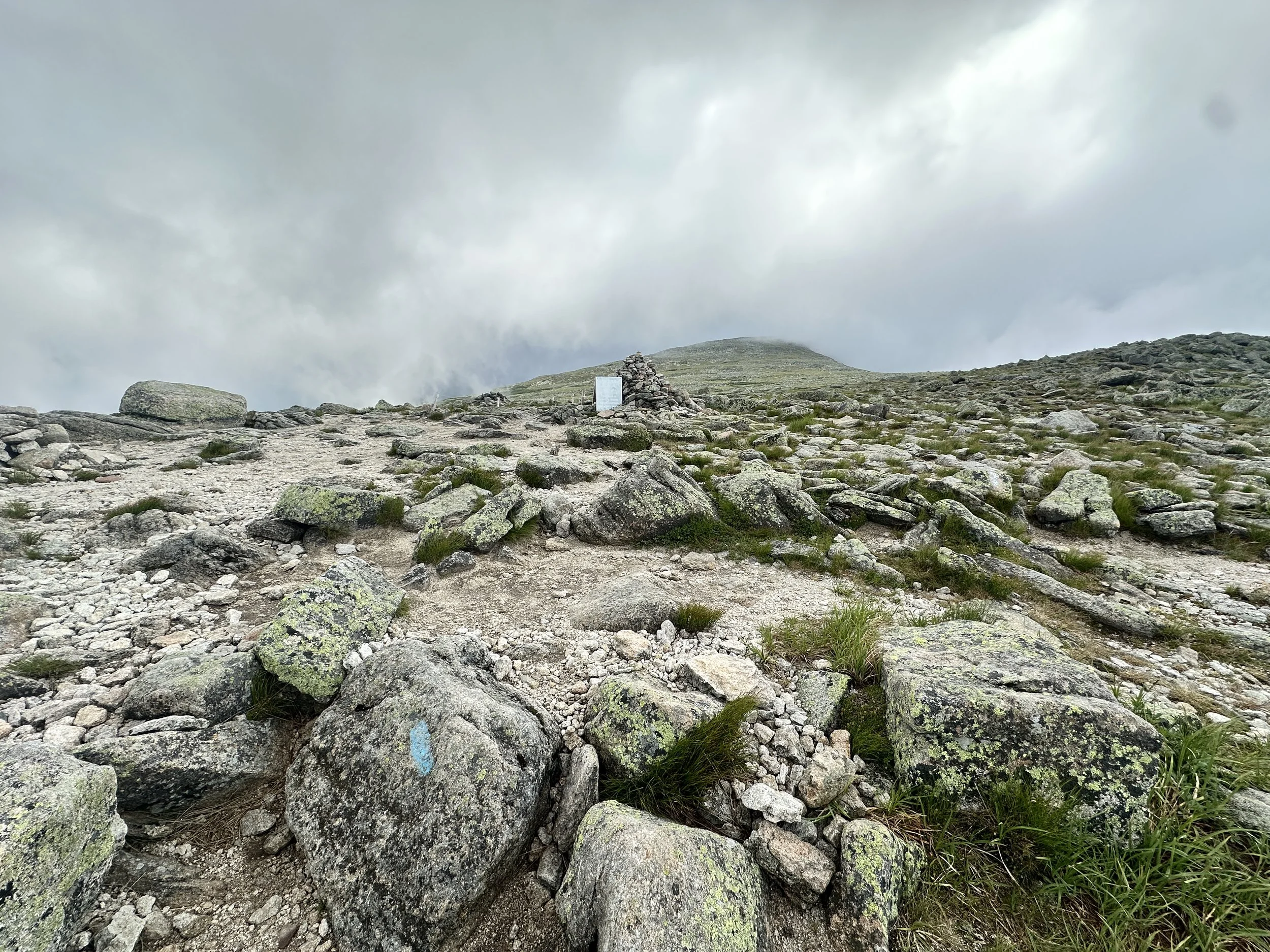
Sunday, June 28th, I departed my home in Millinocket, bound for the Togue Pond gate, and then Abol Campground. I had a planned ascent from Abol Campground to Baxter Peak, with a planned descent of the same route in reverse. Life has a funny way of putting you where you need to be, though. I wasn’t in any particular hurry hiking up on Sunday; I was, after all, volunteering my time as Summit Steward. I stopped to take pictures of fungi and videos of bird song while climbing, and the cloudy weather made me think things might clear after a shower or two. Leapfrogging with a group of 4, I made my way along the newer rerouted section of Abol around the slide. Periods of dense cloud cover were punctuated by brief views of the remaining climb above and the sprawling expanse of Baxter State Park below. I passed a gentleman hiking alone, who, like me, noticed the clouds seemed to be breaking up, and he stopped to enjoy the view on a rocky outcropping. I passed a woman and a young boy who were hiking Katahdin for the second time. I offered words of encouragement and continued my climb. I had hoped to catch the weather forecast on my volunteer radio while I was ascending the mountain, but I missed the 7 and 8am broadcasts. I chose to continue climbing, reassured by the appearance of more blue sky than clouds. Finally reaching the tablelands shortly after 9:15, I made a mental note of the dark clouds on the North side of the mountain and continued on. As I moved along the Hunt Trail towards the summit, I observed no needed repairs in the string fencing and thought to myself about inspecting all of the string fencing in other areas too, but I’d save that for the way down. What started as a light drizzle quickly progressed to a downpour. I stopped, put on my pack cover and raincoat, and pressed onward. I passed a couple of groups who were already descending from the summit and spent a few minutes discussing the pros and cons of descending both Abol and Hunt when the rocks are wet. Around 9:45am, finally elevated enough for my radio to intercept communications within the Park, I caught a report of an injured hiker on the Knife Edge. I had already been slipping off the rocks on the last mile of the summit climb, and I knew some of the drops on the Knife Edge are steep and challenging in dry conditions.
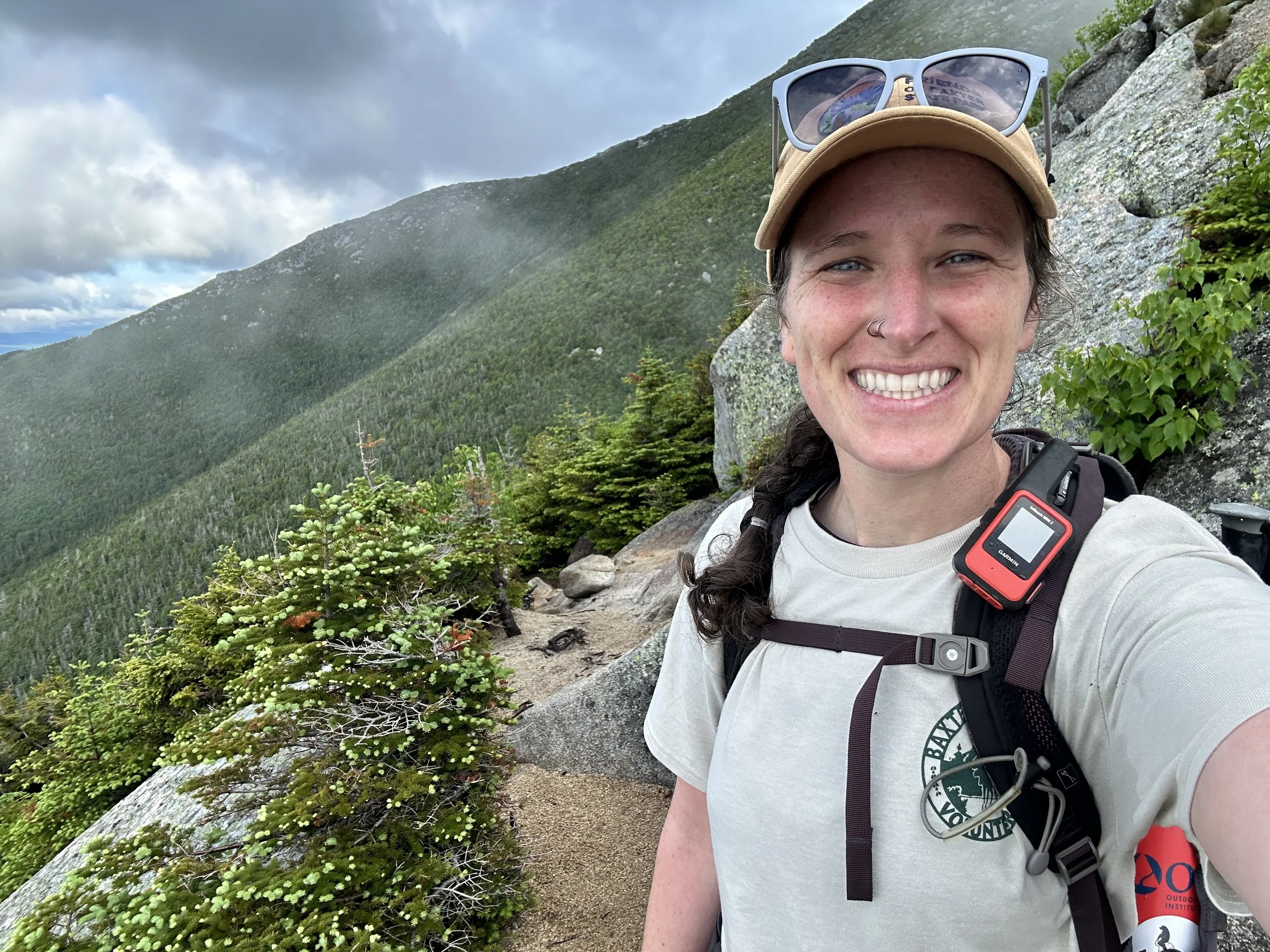
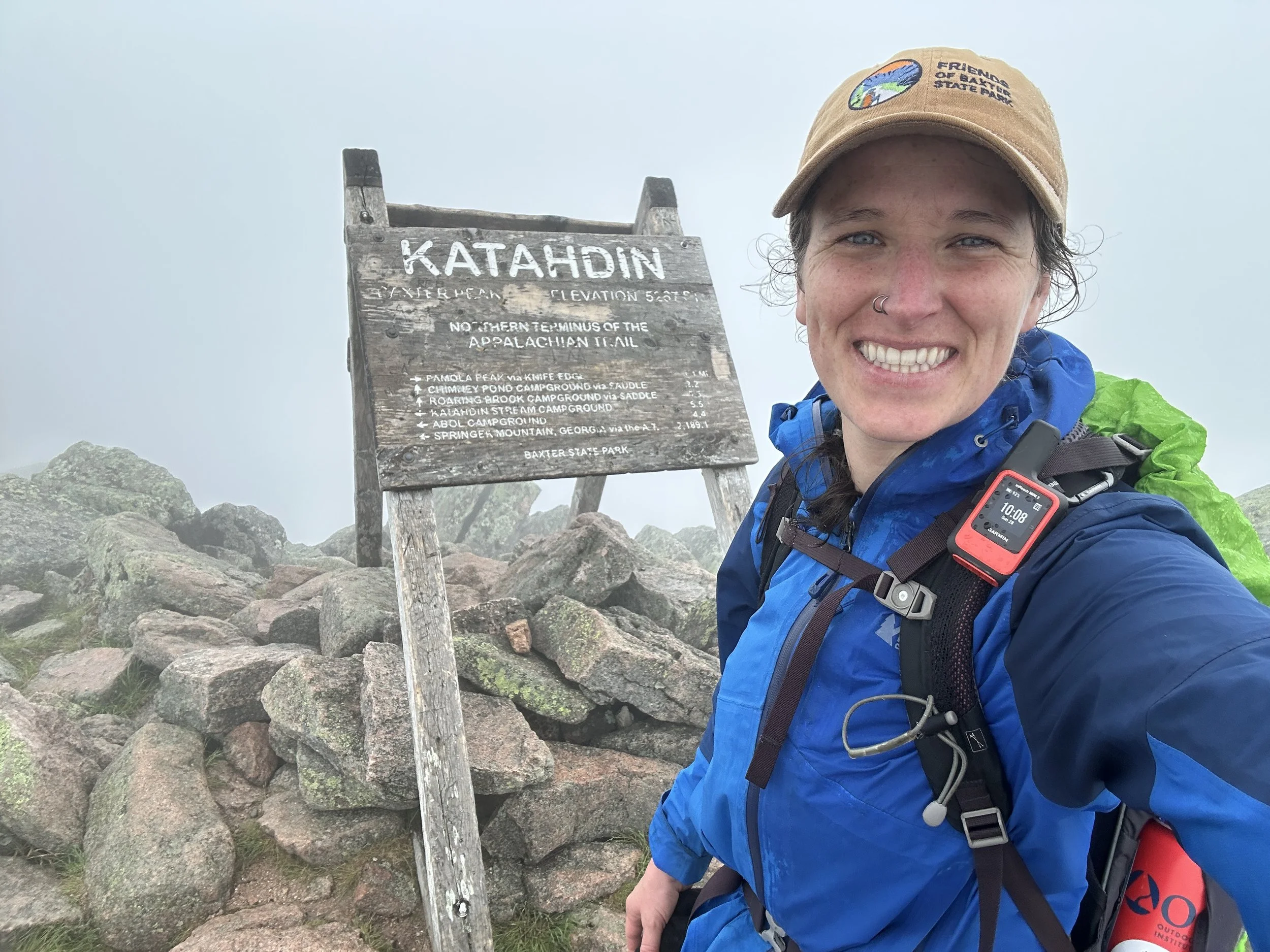
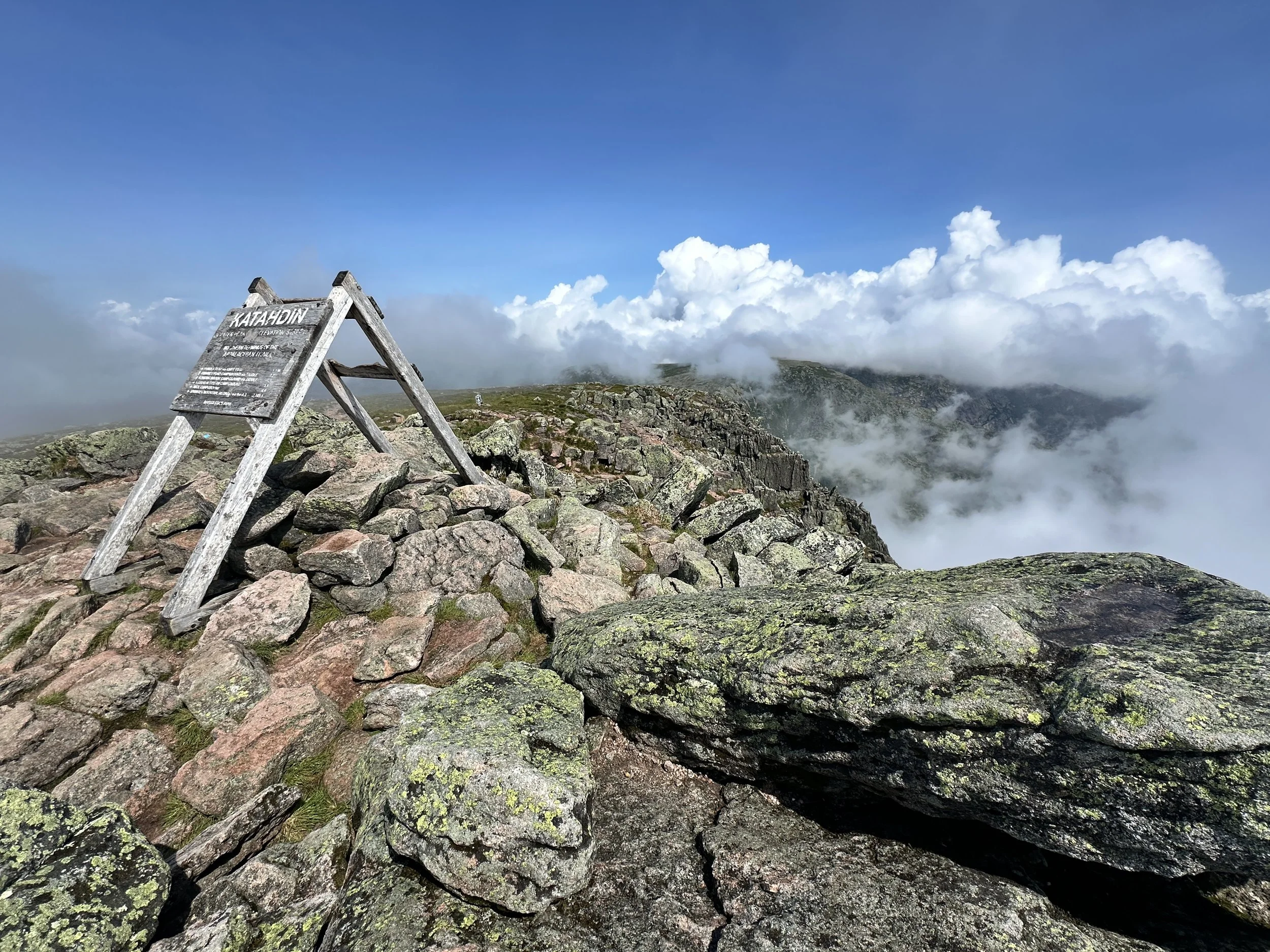
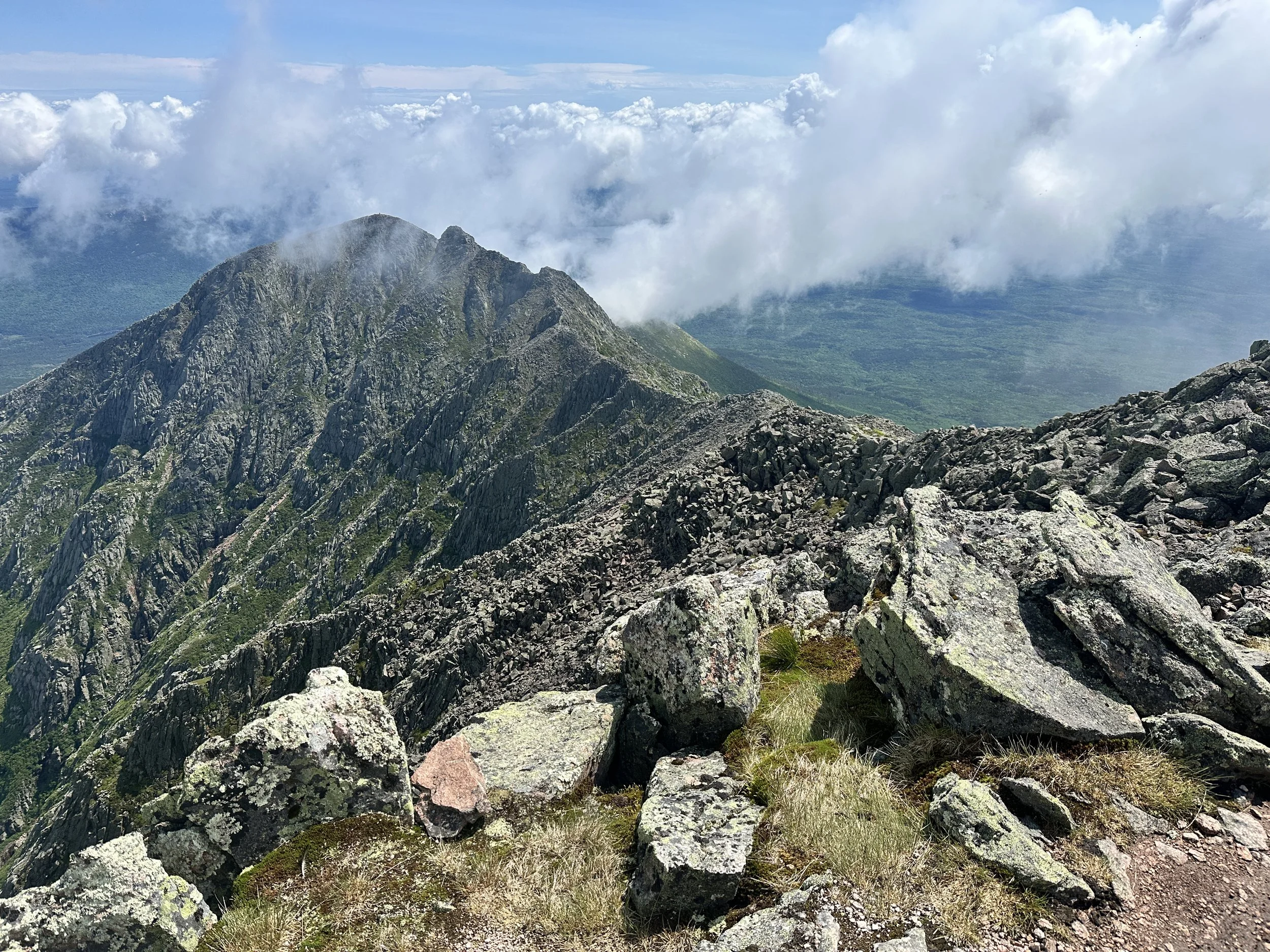
I arrived at the summit shortly after 10am to find it socked in, but thankfully precipitation-free. I took my summit selfie and decided to have a snack while I waited for any updates on the injured hiker's status. As the Park worked to mobilize the many moving parts of a mountain rescue, it became quite clear to me that I was the closest person, but at least an hour, if not two. As a Wilderness First Responder and a Registered Nurse with nearly a decade of Emergency Medicine experience, I weighed the risk of hiking across the Knife Edge, in wet conditions, to render aid. Would it create a situation where two people need to be rescued? Possibly, but the most technical part of the Knife Edge (The Chimney) was my destination, and I wouldn’t arrive there for at least an hour. Would I have to come back across the Knife Edge to descend Abol? That is, after all, where I parked my car. Would I have a way to alert my husband, who was guiding a hike across the Knife Edge that very same day, that my hiking itinerary was changing? Had he changed his itinerary based on the weather? How long might I be with the injured hiker in the Chimney? My nurse brain was swirling with so many questions, but the most important was: What condition is this injured hiker in? The initial report suggested a substantial fall that resulted in injury. As I ate my snacks and monitored the radio chatter, the summit clouds began to break up, and there were views across to Hamlin Peak and glimpses of Pamola, though the Knife Edge remained under persistent clouds. I began to pack up my things, determined to offer my skills, and radioed the Park Supervisor to alert them that I was available and willing to traverse the Knife Edge to assess the patient.
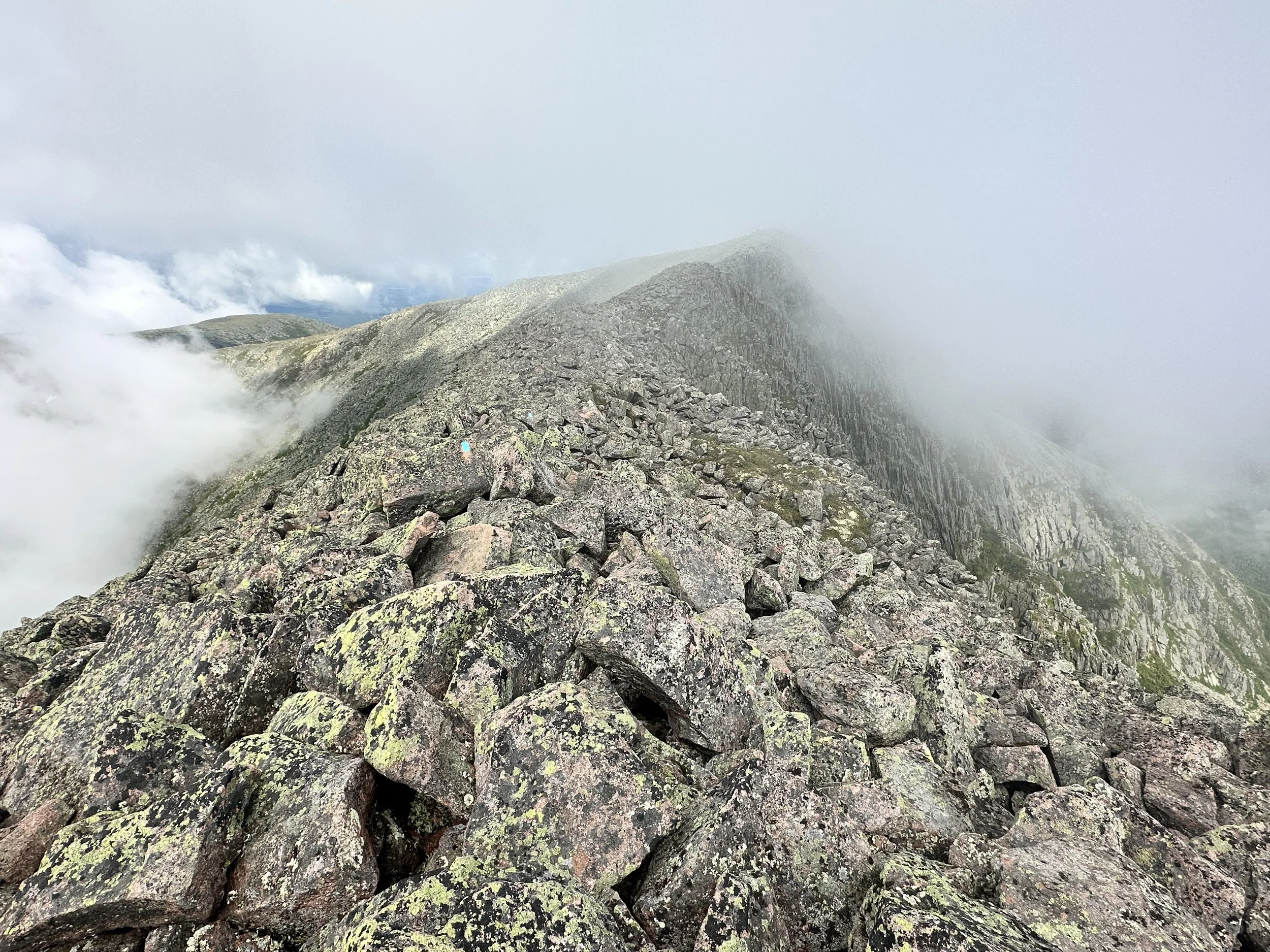
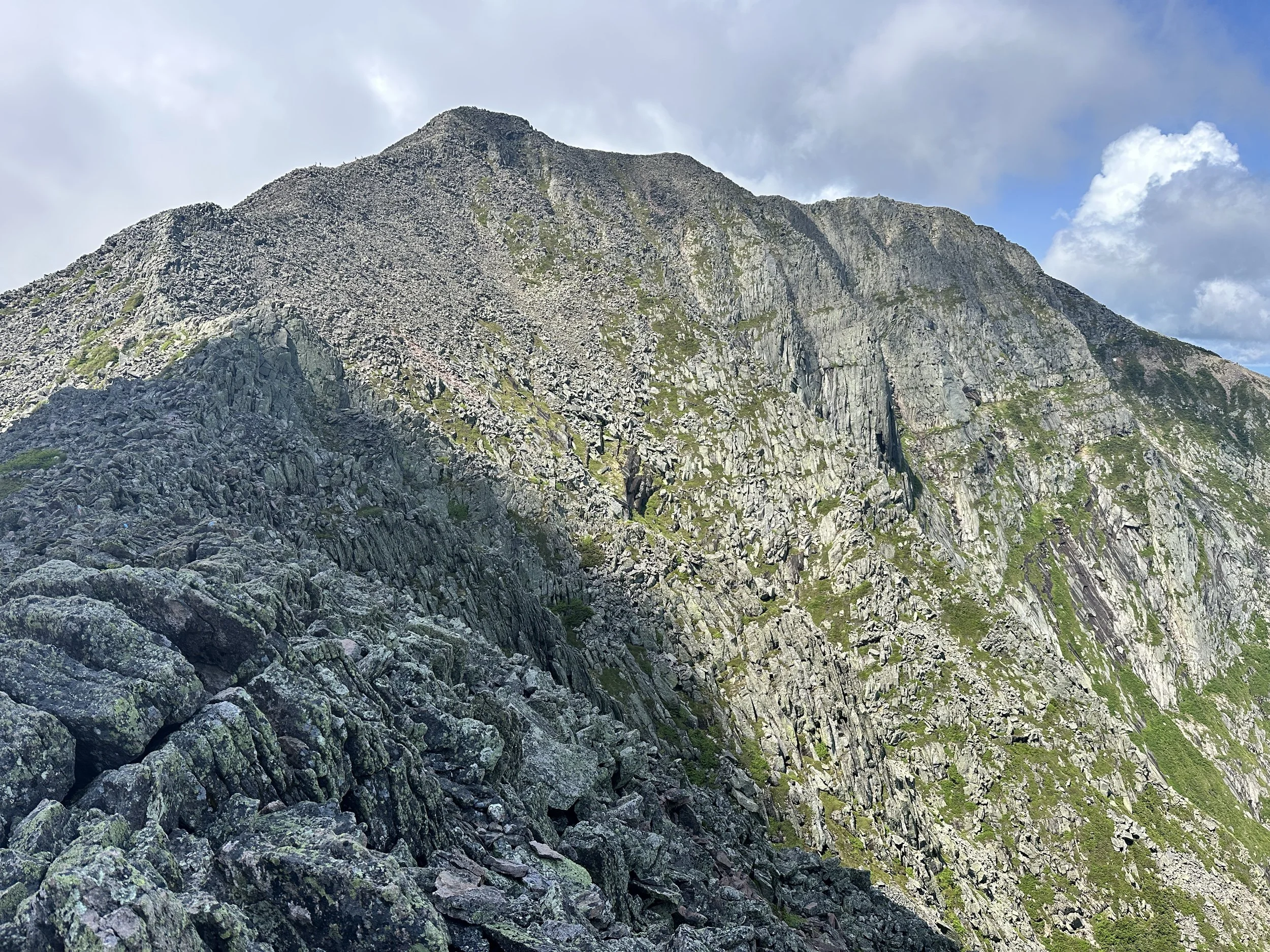
When I started across the Knife Edge, the rocks were wet, and I questioned how sound my decision had been. Thankfully, the wind picked up to 5-10 mph, and within a few minutes I noticed I was no longer hiking on wet rocks. I found this change in condition, accompanied by the lifting of the cloud ceiling, very encouraging. Just plodding along, ensuring I had solid footing at each step, I looked up as I approached an area of the Knife Edge that I can only characterize as shuffling along a granite ledge, and recognized a familiar face. My husband and his guided client were approaching. I was elated that I could put some of the questions in my head to rest. He knows where I am, and I know where he is. As we got closer, he asked if I was heading to the injured hiker and said they had met him about 10 to 15 minutes ago. He, a fellow wilderness first responder, offered a reassuring assessment of the injured hiker. With a quick kiss, we set out in our respective directions, them towards Baxter Peak, and me towards the Chimney. At 11:30 exactly, I dropped my backpack and introduced myself. With an audible exhale and cries of relief from both the injured hiker and the laypeople who had stopped to render aid, it was clear they were expecting someone less experienced. I immediately began pulling my paperwork and a pair of gloves from my bag and asked the injured hiker if it would be okay to ask him some questions. The Park Supervisor had instructed me to reach out via cell service after my assessment to begin coordinating the next steps.
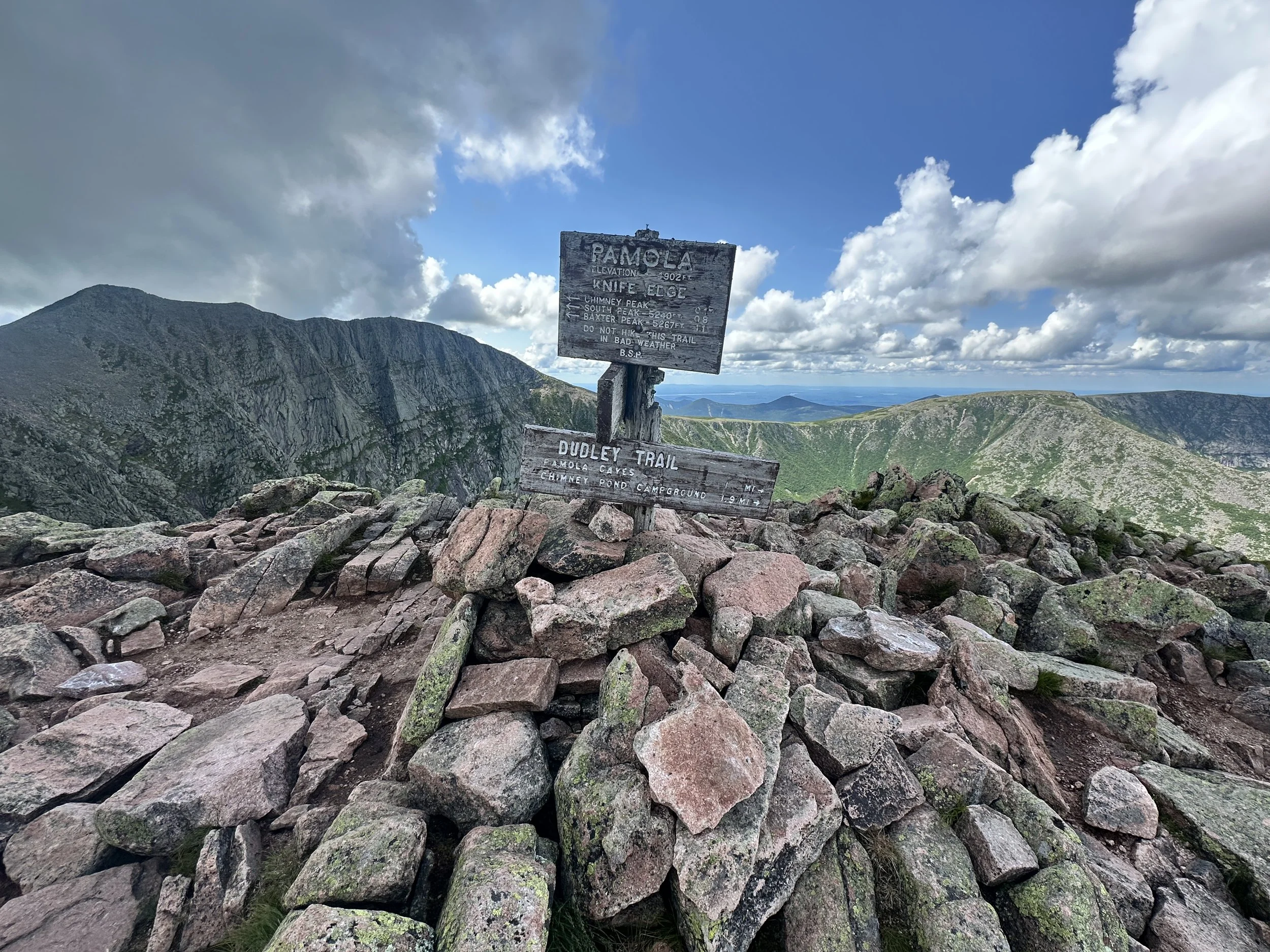
With the ball set in motion, there was nothing left to do but watch and wait. Wait for the two rangers en route to arrive and take over the scene. Wait for supplies to arrive to splint the affected limb. Wait for the clouds to clear, which could offer a window for rescue. We learned about the laypeople who stopped to offer help, a hiking trio, and the injured hiker's friend who hung back to ensure he was okay. We got to know our patient, who, despite his morning's events, was still able to laugh. We checked in to ensure he was still comfortable and warm. We prepared the Chimney for the imminent approach of a Forest Service helicopter, which just looks like securing everything in your backpack, eye protection, ear protection, and getting ready for the wind to pick up. At two different times, the rescue process was initiated and then canceled due to persistent clouds over the southern portion of the Knife Edge, creating a blind approach for the helicopter. Finally, around 2pm, the clouds to the south lifted, and we were notified that the Forest Service helicopter and short-haul crew were in the air and on their way. For those who might be unfamiliar with the concept of a short-haul, look it up; it’s wild. A few minutes later, Marty from the Forest Service gently landed in the Chimney, and the helicopter took a wide lap around Pamola while we secured the patient in a rescue triangle; the patient was outfitted with safety glasses and a helmet because dangling on the end of a rope underneath a helicopter comes with its own risks. The moment of truth approached. As the helicopter approached us again from the south, our task was to retrieve the end of the rope to which Marty and our injured hiker would be airlifted to safety. Watching the Forest Service crew work was nothing short of amazing. I thank them for the work they did not just on Sunday, but for every mission past and present, where they put their lives on the line. Pun intended, Marty.
Being a part of a multiagency effort was truly a gift. It is also the highest privilege to aid a hiker in their moment of need. For me, it felt like the moment when my first career and my second career collided. My passion to be the calm in someone else's chaos, and my passion for hiking in beautiful places. To hold space for them in whatever way they need, while bringing them competent, compassionate, and kind care. Medical training and knowledge are invaluable in the wild, and this experience only reinforced that. I wish our injured hiker grace and patience on his long road to recovery.
post publish edit - 6.30.29 1800
I opted for the option of hike down Helon Taylor with a BSP Ranger, who was also on the rescue. While a third BSP Ranger descended back to Chimney Pond via the Dudley trail. I was graciously transported back to my car by another BSP Ranger.
I thank all of you for your assistance in arriving back to my car (I promise I wont make a habit out of it) and more importantly for having faith in me. It was a full day, and a fulfilling day. ✨
Cassandra Stewart
Millinocket, Maine